


















Physical setbacks are an inherent risk for anyone pushing their physiological limits. While the desire to resume a fitness routine is a natural response to forced inactivity, returning to high-intensity training too quickly often results in secondary injuries or chronic complications. Rebuilding a resilient body requires a structured, patient approach that prioritizes long-term health over immediate gratification.
Before re-engaging with your sport or gym routine, consider these foundational pillars of safe rehabilitation:
- Secure professional medical validation before starting any exercise.
- Respect the biological timeline required for tissue repair.
- Acknowledge how periods of inactivity lead to systemic deconditioning.
- Initiate movement at approximately half of your pre-injury intensity.
- Prioritize low-impact modalities to minimize joint stress.
Adhering to these evidence-based principles ensures that your transition from rehab to performance remains consistent and safe.
Essential Insights for a Successful Recovery
- Healing is a non-linear process; rebuilding strength typically requires at least double the duration of the initial downtime.
- The “50% Rule” serves as a safety threshold for the first week of return, allowing for gradual physiological adaptation.
- Suspension training systems are highly effective for rehabilitation because they allow for immediate adjustments in resistance and focus on stabilizing the kinetic chain.
The Necessity of Professional Medical Consultation
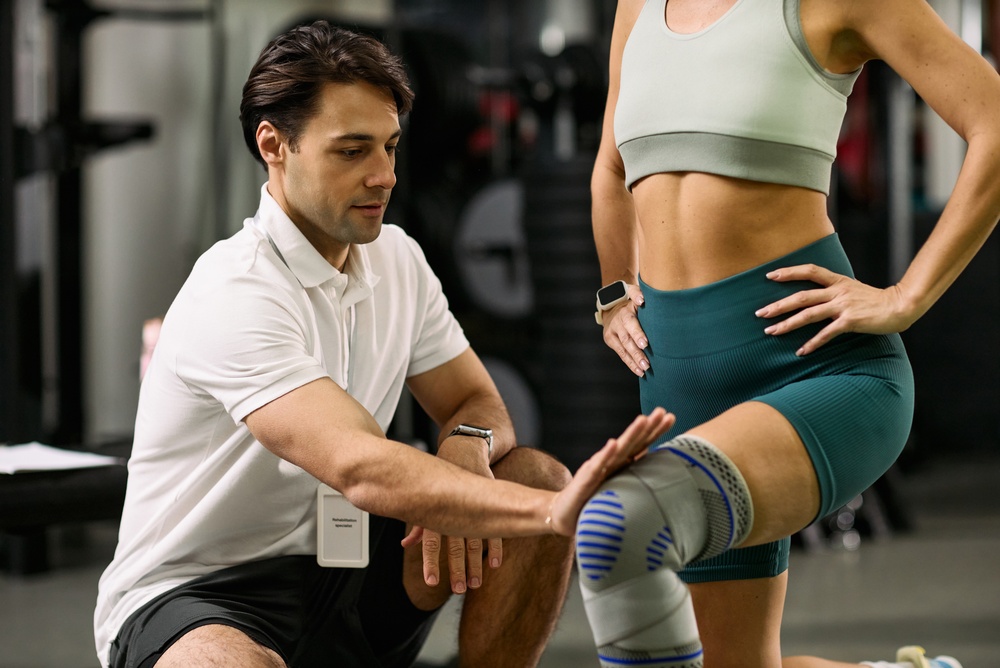
Regardless of the perceived severity of a musculoskeletal injury, a formal assessment by a healthcare professional is non-negotiable. Physical therapists and sports medicine doctors provide the necessary diagnostic clarity to ensure that tissues have sufficiently healed to withstand mechanical stress. Pushing through “minor” discomfort without clearance can jeopardize fragile fibers that are still in the remodeling phase.
Objective indicators that your body may be ready for activity include the significant reduction or absence of localized pain, the resolution of inflammatory swelling, and the restoration of a functional range of motion. Professional guidance also provides you with specific modifications that prevent you from overtaxing the vulnerable area during the early stages of re-entry.
Key indicators of readiness include:
- Negligible pain during daily functional movements.
- Effective management of localized inflammation.
- A near-complete return of joint mobility.
- Direct clearance from a qualified medical practitioner.
- A personalized plan that accounts for specific biomechanical needs.
Respecting the Biological Speed of Healing
Physiological recovery cannot be accelerated through willpower alone. A general rule of thumb in sports science is that regaining previous fitness levels takes at least twice as long as the period of inactivity. For instance, a month-long break due to injury may require a two-month gradual build-up to reach peak performance safely. This window allows the nervous system to recalibrate and the structural tissues to regain their load-bearing capacity.
The Impact of Systemic Deconditioning
When an injury necessitates rest, the body undergoes deconditioning that extends beyond the site of the injury. Neuromuscular pathways—the communication between the brain and muscles—can become less efficient, leading to feelings of instability or diminished coordination. This often results in “compensation patterns,” where the body subconsciously shifts the workload to healthy joints and muscles to protect the injured area.
For example, a knee injury frequently causes the opposite hip or the lower back to overwork, potentially leading to secondary strain. Effective rehabilitation must address the entire body as a single unit, correcting these imbalances and retraining the brain and muscles to operate in harmony once more. True resilience is built by ensuring no single part of the “team” is overcompensating for another.
Managing Workload and Incremental Progression
Once cleared for activity, the safest strategy is to begin at 50% of your habitual effort. This conservative starting point provides a baseline to monitor how your body responds to mechanical loading without risking a setback. Increasing the volume or intensity of your workouts by approximately 10% to 15% per week allows tendons and ligaments—which heal more slowly than muscles—time to adapt.
A comprehensive warm-up is essential to increase blood flow and tissue elasticity, while a structured cool-down supports the removal of metabolic waste and reduces post-workout stiffness. Throughout this process, biofeedback is your most valuable tool. If you encounter sharp pain or recurring swelling, it is a clear signal to maintain or slightly reduce your current activity level before attempting further progression.
A structured return-to-play checklist includes:
- Capping the initial effort at 50% of your previous capacity.
- Limiting weekly workload increases to small, manageable increments.
- Dedication to dynamic stretching and light cardiovascular preparation.
- Post-exercise recovery protocols to manage tissue tension.
- Constant monitoring for adverse signs such as fatigue-related loss of form.
Transitioning with Low-Impact Modalities
The early phases of recovery should focus on movements that stimulate the cardiovascular and muscular systems without excessive impact. Activities such as swimming, stationary cycling, or controlled bodyweight exercises allow for the maintenance of aerobic capacity while protecting healing joints.
During this period, resistance bands and cable systems are often superior to heavy free weights because they provide constant tension and more controlled planes of motion. Choosing engaging, low-impact activities also helps maintain the psychological motivation necessary to navigate the slower pace of rehabilitation.
The Utility of Suspension Training in Injury Rehabilitation
Suspension training offers a unique advantage for those recovering from injury due to its inherent adjustability. By simply changing your body angle, you can instantly modify the load on your muscles and joints. This allows for a seamless transition from highly supported movements to full-intensity strength training as your recovery progresses.
Furthermore, suspension systems demand constant core engagement and activate the smaller stabilizer muscles that are often neglected in traditional machine-based training. These stabilizers are critical for joint integrity and preventing future re-injury. Because it focuses on functional, real-world movement patterns, this type of training helps rebuild a body that is prepared for the unpredictable demands of daily life and sports.
Targeted Suspension Exercises for Specific Needs
Suspension training can be adapted to support various stages of recovery for different body regions.
Lower Body Stability: Assisted Squats
- Utilize the handles for balance and to offload weight as needed.
- Focus on a slow, controlled descent while maintaining upright posture.
- This movement retrains hip and knee tracking while building foundational leg strength.
Posterior Chain Reactivation: Hamstring Curls
- Performing curls with the feet in cradles allows for isolated hamstring work with core integration.
- This is vital for restoring balance between the front and back of the legs after a lower-limb setback.
Upper Body and Posture: Suspension Rows
- Adjust the angle to control the resistance.
- Focus on scapular retraction and posture correction, which is essential for shoulder health.
Anterior Strength: Controlled Chest Press
- This allows for chest and shoulder strengthening without the fixed path of a machine, encouraging the shoulder girdle to stabilize itself naturally.
Core Integration: Suspended Plank
- Elevating the feet adds a stability challenge that forces the deep core muscles to protect the spine, improving overall balance and force transfer.
Structuring Progress with SMART Objectives
A successful comeback is driven by goals that are Specific, Measurable, Achievable, Relevant, and Time-bound (SMART). Instead of vague intentions, focus on clear milestones such as “walking for 30 minutes without pain” or “completing three sets of assisted squats.” Tracking these small victories in a training log provides the psychological momentum needed to stay disciplined throughout the recovery journey.
Monitoring Biofeedback and Recognizing Red Flags
Developing an acute awareness of your body’s signals is critical when reintroducing exercise. While mild muscle soreness (DOMS) is a normal part of training, sharp, stabbing, or radiating pain is a clear warning sign. If daily tasks—such as climbing stairs or lifting light objects—still cause discomfort, your body is not yet ready for the added stress of a structured workout.
Key considerations for monitoring your response include:
- Differentiating between healthy muscle fatigue and pathological pain.
- Terminating any movement that causes an immediate increase in symptoms.
- Reducing intensity if you experience a “flare-up” that lasts more than 24 hours post-exercise.
- Consulting experts to distinguish between neural tension and muscular tightness.
- Ensuring basic functional capacity is restored before adding external resistance.
Cultivating a Resilient Recovery Mindset
Physical rehabilitation is as much a mental challenge as a physical one. Maintaining a positive outlook and viewing the recovery period as an opportunity to fix underlying biomechanical flaws can transform a setback into a breakthrough. Use this time to educate yourself on proper form and nutrition, ensuring that you return to your sport as a more knowledgeable and balanced athlete.
Enhancing the Mind-Body Connection
Suspension training is particularly effective at sharpening proprioception—your brain’s ability to sense where your limbs are in space. Because the straps move, your brain must constantly communicate with your muscles to maintain stability. This heightened awareness not only makes your workouts safer but also helps you catch subtle signs of fatigue before they lead to poor form and potential injury.
Utilizing Cross-Training to Maintain Conditioning
An injury to one part of the body does not mean the rest of the body must remain stagnant. Cross-training allows you to maintain cardiovascular fitness and muscular tone in unaffected areas. If a foot injury prevents running, focus on upper-body strength or swimming. If a shoulder injury limits lifting, prioritize lower-body mobility and core stability.
This holistic approach prevents total-body deconditioning and provides a sense of accomplishment while the specific injury heals. A balanced routine that incorporates flexibility, strength, and low-impact cardio ensures that your transition back to full activity is smooth and efficient.
Developing a Comprehensive Functional Routine
A well-rounded recovery plan should mirror the primary movement patterns used in daily life: pushing, pulling, hinging, squatting, and rotating. By training these movements rather than isolated muscles, you prepare your body for the complex stresses it will face in the real world. Functional training builds a “buffer” of strength and stability that protects joints from sudden forces or awkward positions.
Phased Advancement in Your Training Regimen
Think of your return to fitness as a three-phase journey:
- Phase 1: Mobility and Reactivation. Focus on restoring range of motion and “waking up” dormant muscles with very light resistance.
- Phase 2: Strength and Stability. Introduce more challenging angles and single-leg movements to build structural integrity and balance.
- Phase 3: Power and Integration. Reintroduce faster movements and sport-specific drills to prepare the body for high-intensity performance.
Recording your progress in a journal is essential. Documenting your sets, reps, and, most importantly, how you felt during and after each session allows you to make data-driven decisions about when to advance to the next phase.
The Significance of Integrated Movement Patterns
The Science of Coordinated Physical Capability
The human body functions as an integrated kinetic chain. In movement, no muscle works in total isolation. Functional training recognizes this by emphasizing movements that require multiple muscle groups to work together. This coordination is what creates true physical resilience.
By prioritizing integrated patterns, you improve the synergy between your muscular and nervous systems. This leads to better balance, more efficient force production, and a significantly lower risk of future injuries. Whether your goal is elite athletic performance or simply moving through life without pain, training for functional coordination is the most effective long-term strategy.
- Fosters whole-body coordination rather than isolated muscularity.
- Translates directly to improved performance in daily activities and sports.
- Enhances joint stability by training muscles to respond to unpredictable stimuli.
- Improves the body’s ability to absorb and distribute mechanical stress.
Final Strategy for Sustainable Performance
Returning from an injury is a journey that demands discipline, patience, and a strategic mindset. By following a structured protocol—moving from medical clearance to gradual intensity increases and functional movement integration—you ensure that your return to training is permanent rather than a brief bridge to another injury. Use this period to build a smarter, stronger foundation, utilizing tools like suspension training to foster a resilient and capable body.
Scientific Resources and Supporting Literature
- Flück, Martin, and Hans Hoppeler. “Molecular basis of skeletal muscle plasticity—from gene to form and function.” Reviews of Physiology, Biochemistry and Pharmacology, vol. 159, 2008.
- American College of Sports Medicine. “ACSM’s Guidelines for Exercise Testing and Prescription.” Lippincott Williams & Wilkins, 2018.
Summary: A successful return to exercise after an injury is predicated on a slow, phased approach that respects biological healing timelines and utilizes functional movement to correct imbalances. By prioritizing medical clearance, starting at 50% intensity, and focusing on total-body stability through tools like suspension training, you can rebuild a more resilient foundation and minimize the risk of future setbacks. Recovery is not a race; it is an investment in your future physical longevity.