

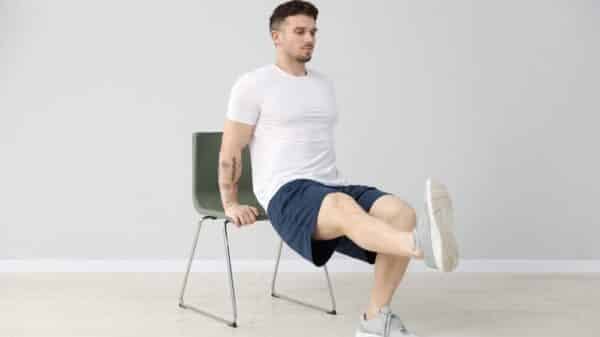



















Stepping back into a fitness routine after a hiatus requires more than just willpower; it requires a strategy that respects your body’s current state while pushing for progress. The “all-or-nothing” mentality is often what leads to burnout or injury within the first ten days. Instead, this 4-week blueprint focuses on “re-adaptation”—reawakening the central nervous system, restoring joint mobility, and gradually building the work capacity needed for long-term success.
This program isn’t about guesswork. It’s a structured journey through strength, cardiovascular health, and metabolic conditioning. By the end of the month, you won’t just be “back in the gym”—you’ll have a foundation that’s stronger than the one you left behind.
TLDR: Here’s A Quick Read for You
The 4-week comeback plan prioritizes a balanced split of strength and conditioning to prevent overtraining.
Success relies on progressive overload—gradually increasing weight or intensity—to ensure the body continues to adapt.
Integrating suspension training (TRX) is a high-value addition for improving core stability and functional movement patterns.
Our 4-Week Workout Plan to Jumpstart Your Gym Comeback
Returning to exercise after a break can be a mental hurdle. You remember what you used to lift, and the gap between then and now can feel discouraging. This plan bridges that gap. By mixing resistance training with low-intensity steady-state (LISS) cardio and high-intensity interval training (HIIT), we target all energy systems.
The logic here is simple: muscle memory is real, but your connective tissues (tendons and ligaments) take longer to adapt than your muscles. This plan uses a “ramp-up” approach to protect your joints while your muscles regain their former strength. It’s flexible enough for a complete beginner but scalable for a seasoned lifter looking for a structured re-entry.
What You’ll Need to Get Started
You don’t need a warehouse full of iron to see results. Most of these movements can be replicated with minimal equipment, making this plan accessible whether you are at a commercial gym or in your garage.
Dumbbells: The gold standard for identifying and fixing strength imbalances between your left and right sides.
Resistance Bands: Excellent for “prehab” work and adding variable resistance to standard lifts.
TRX Suspension Trainer: This is a secret weapon for core engagement. Because the straps are unstable, every move becomes a core exercise.
Basic Machines: Leg presses and cable rows are great for isolating muscles when your stabilizers are fatigued.
How Is The Program Structured?
Consistency is the byproduct of a manageable schedule. We use a weekly split that ensures no muscle group is overworked while keeping the heart rate challenged.
Day 1: Lower Body (The foundation of metabolic demand).
Day 2: LISS Cardio (Promotes blood flow and nutrient delivery to recovering muscles).
Day 3: Upper Body (Focus on posture and structural balance).
Day 4: LISS Cardio (Active recovery to prevent DOMS—delayed onset muscle soreness).
Day 5: Interval Conditioning (Building “engine” and burning calories).
Days 6 & 7: Rest (Where the actual muscle growth happens).
Week 1: Building Your Foundation
The goal of Week 1 is “movement quality.” We are teaching your brain how to recruit muscle fibers again. Don’t worry about the ego-lift; focus on the “squeeze” and the range of motion.
Day 1: Lower Body Strength
Focus on 3 sets of 12 reps to build endurance:
Goblet Squats: Keeps the torso upright, protecting the lower back.
Dumbbell RDLs: Focus on the “hinge” at the hips, not bending at the waist.
TRX Suspension Squats: Use the straps to sit deeper into your squat than you could otherwise.
Leg Press/Leg Curl: Use these to safely reach muscular fatigue without risking balance.
Insight: For the Goblet Squats, hold the weight like a “diamond” under your chin. This counter-balance naturally corrects your squat form.
Day 2: Low-Intensity Cardio
Choose an activity you enjoy—walking, swimming, or a light bike ride. Aim for Zone 2 cardio, where you can still talk but your heart rate is elevated. 20–30 minutes is the “sweet spot” for Week 1.
Day 3: Upper Body Strength
We want to balance “pushes” (bench press, overhead press) with “pulls” (rows, lat pulldowns). For every pushing set you do, you should ideally do a pulling set to maintain shoulder health.
Day 4: Low-Intensity Cardio
Active recovery. If you are feeling particularly sore, focus on mobility work or a very gentle walk. The goal is movement, not exhaustion.
Day 5: Interval Conditioning
3 rounds of 15 seconds of work followed by 15 seconds of rest. Exercises like mountain climbers or bodyweight squats work best here. It’s a short “shock” to the system to boost metabolism heading into the weekend.
Week 2: Increasing the Challenge
Now that the initial soreness has subsided, it’s time for “micro-loading.” Add a small amount of weight (5lbs) or an extra rep to your sets. This signals to your body that the “new normal” requires more strength.
Day 1: Lower Body Strength
Keep the 3×12 rep scheme but increase the resistance. Introduce the TRX Assisted Pistol Squat. Single-leg work is vital because it forces your core to stabilize your pelvis, preventing future back pain.
Day 3: Upper Body Strength
Incorporate the TRX Atomic Push-Up. By placing your feet in the cradles, you turn a standard chest exercise into a total-body stability challenge. This builds the “functional” strength that carries over into real-world activities.
Week 3: Shifting to Strength Building
This is the “Power Pivot.” We drop the reps to 8 per set and increase the weight. This shift moves the focus from muscular endurance to hypertrophy (muscle growth) and raw strength.
Day 1: Lower Body Strength
Heavy Barbell Squats or Deadlifts (3×8). At this rep range, the last two reps should feel difficult, but your form should remain perfect. If your back rounds, the weight is too heavy.
Day 5: Interval Conditioning
Increase to 5 rounds. Introduce “Power Pulls” on the TRX or Jump Squats. We want to train your “fast-twitch” muscle fibers, which are the first to atrophy as we age or take breaks from the gym.
Week 4: Solidifying Your Comeback
This is the “Peaking” week. You should feel more coordinated and energetic. We maintain the heavy 3×8 rep scheme to solidify the strength gains from Week 3.
Day 5: The Grand Finale
6 full rounds of conditioning. This is your “benchmark” workout. Compare how you feel today to how you felt on Day 5 of Week 1. You’ll likely find that your recovery time between sets has dropped significantly.
Why Suspension Training for Your Gym Comeback?
Many people view suspension training as “just bodyweight,” but it’s actually a sophisticated way to manipulate physics. By changing the angle of your body relative to the floor, you can increase or decrease the load instantly.
Unlike machines that lock you into a fixed path, TRX requires your “stabilizer muscles” to fire constantly. This is crucial for a comeback because it strengthens the small muscles around your joints, providing a “natural brace” that prevents injury as you return to heavier barbell lifting.
Training at Home vs. the Gym: Your Comeback Can Happen Anywhere
The best workout plan is the one you actually do. If the commute to the gym is a barrier, don’t let it stop you. A set of adjustable dumbbells and a suspension trainer hung over a door can provide 90% of the stimulus of a commercial gym. The key is Progressive Overload. Whether you add weight, slow down the tempo, or decrease rest time, as long as you are doing “more” than last week, you will see results.
What Results Can You Expect After This 4 Week Plan
By the end of 28 days, you shouldn’t just look for changes in the mirror. Expect to see:
Neurological Efficiency: Exercises that felt “clumsy” in Week 1 will feel smooth and natural.
Metabolic Flexibility: Your body becomes better at switching between burning carbs for high-intensity work and fat for low-intensity work.
Postural Improvement: The focus on rows and core stability will likely have you standing taller and experiencing less “desk-worker” neck pain.
What Happens After Week 4? Continuing Your Progress
Don’t stop here. You can repeat this 4-week cycle by increasing the base weights, or you can transition into a more specialized split (like Push/Pull/Legs). The goal of these 4 weeks was to build the habit and the capacity. Now that you have both, the fitness world is your oyster.
Comeback Success: Tips for the Whole Process
Hydration is Non-Negotiable: Muscles are roughly 75% water. Dehydration leads to strength loss and increased injury risk.
The 10-Minute Rule: On days you don’t want to train, commit to just 10 minutes. Usually, once the blood starts flowing, you’ll finish the whole session.
Protein for Repair: Aim for roughly 0.7 to 1 gram of protein per pound of body weight to support the tissue repair this plan triggers.
References
American College of Sports Medicine. “ACSM’s Guidelines for Exercise Testing and Prescription.” ACSM, 2018.
National Institute on Aging. “Exercise and Physical Activity.” National Institutes of Health, 2021.
Closing Remark: Reclaiming your fitness is a marathon, not a sprint. This four-week plan is designed to give you the momentum needed to turn a “comeback” into a permanent lifestyle. Listen to your body, celebrate the small victories—like a heavier set of squats or a faster mile—and remember that consistency over time always outperforms intensity in a vacuum. You’ve taken the first step; now keep the straps tight and the weights moving.