



















Ever watch a fighter throw a devastating hook and wonder how they generate that kind of power? It’s not just about muscle it’s rotational force, rock-solid core stability, and the conditioning to keep throwing shots in round five.
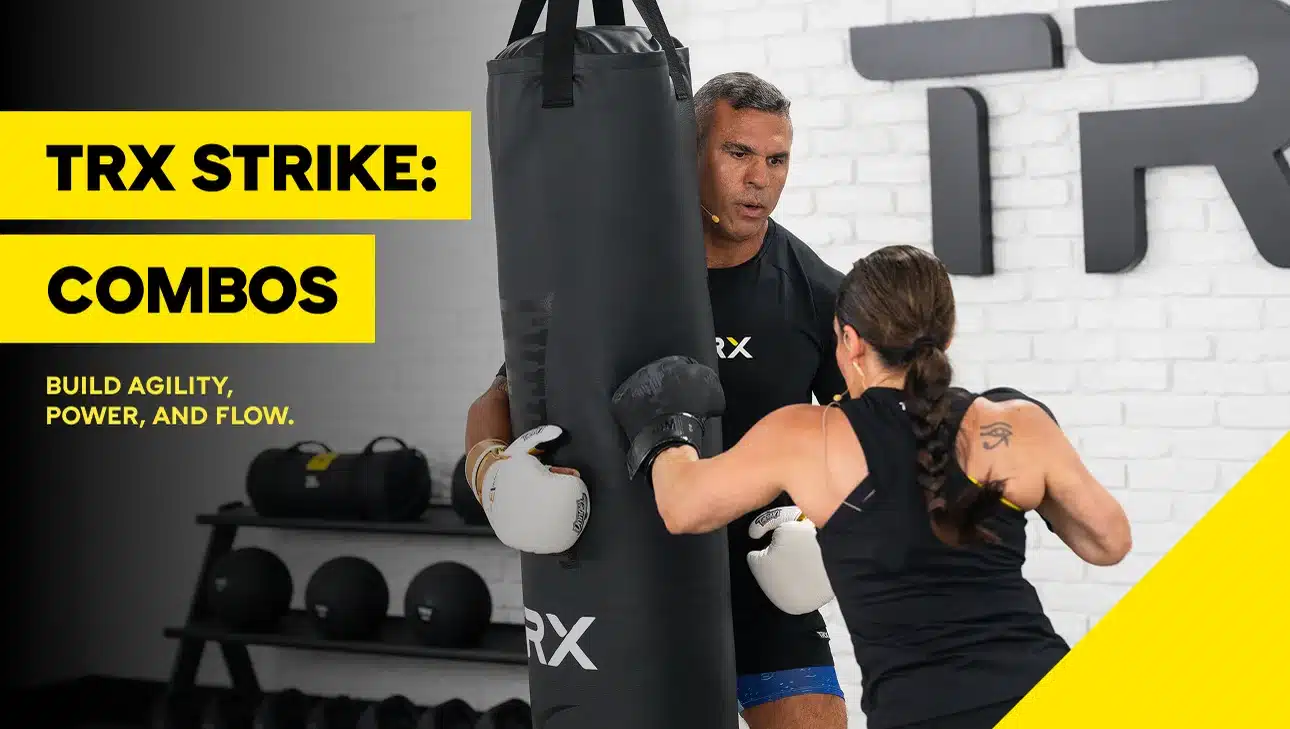
TRX Strike combines suspension training with rotational resistance to mimic the exact movement patterns fighters use. Think punches, kicks, and sprawls all with added challenge.
In this guide, you’ll get a complete TRX MMA workout that builds functional power and fight-ready endurance. Let’s get to work.
What Is TRX Strike Training for MMA?
TRX Strike Training pairs two tools that complement each other surprisingly well. The TRX Rip Trainer uses an asymmetric resistance cord to build rotational power, the kind you need for punches, elbows, and hip-driven kicks.
Suspension training with the TRX Straps adds bodyweight challenge to movements like rows, planks, and single-leg work. Together, they target exactly what fighters need: core stiffness that transfers force, grip strength that doesn’t quit, and conditioning that holds up under pressure.
TRX Training started with a Navy SEAL who needed portable equipment that actually worked. That origin story matters because the brand never drifted into gimmicks. Athletes, coaches, and tactical professionals use TRX gear because it builds functional strength that shows up in real movement.
For mixed martial arts training, that means training patterns that look and feel like fighting, not isolated gym exercises that fall apart when things get chaotic.
Why TRX Training Works for MMA Fighters
Fighting happens in every direction. You rotate to throw a cross, brace sideways in the clinch, and push off at weird angles during scrambles. TRX suspension training forces your body to stabilize through all of it because nothing is fixed.
Your core has to work constantly to control movement, which builds the kind of multi-planar strength that actually transfers to striking and grappling. That instability also trains your joints to handle unpredictable forces, the same ones that wreck knees and shoulders when fighters get lazy with their conditioning.
The TRX Rip Trainer adds something most gym setups can’t replicate. It loads rotation without compressing your spine the way heavy barbell twists or awkward cable setups do. You can train explosive power for hooks, uppercuts, and rotational kicks while keeping your back healthy.
Traditional resistance tools weren’t designed for fight movement. The Rip Trainer was. That distinction matters when you’re trying to build power you can use in the cage without paying for it later in the training room.
Essential Warm-Up for MMA TRX Strike Workouts
Your hips, thoracic spine, shoulders, and core are about to take a beating in the best way possible. Rotational power starts from the ground and travels through your midsection, so everything in that chain needs to be loose and ready.
Skip the warm-up and you’ll feel sluggish on the first combo, or worse, tweak something that sidelines you for weeks. Five to ten minutes of focused prep makes the actual workout hit harder.
Understanding proper MMA conditioning principles helps fighters maximize their training efficiency. Professional MMA fighters integrate TRX into their warm-up routines for exactly these reasons.
Example Warm-Up Movements (mostly non-TRX):
Jump rope or shadowboxing (2-3 minutes to get your heart rate up)
World’s Greatest Stretch (5 reps each side)
Hip openers and leg swings (10 each direction)
TRX Squat to Reach (8-10 reps to open hips and thoracic spine together)
TRX Standing Rollout at light range (8-10 reps to wake up core stabilizers)
The non-TRX stuff gets blood moving and joints loose. The TRX activation movements force the smaller muscles around your joints to engage before you ask them to handle explosive work. Think of it as flipping the switches before you turn on the power.
Key Components of a TRX MMA Workout
Think about this workout in terms of what your body needs to do, not what equipment you’re holding. TRX tools enhance your training but they don’t replace the basics.
You still need to throw medicine balls, shadowbox, and grind through traditional conditioning. The suspension straps and Rip Trainer plug into that foundation to challenge stability and rotation in ways other equipment can’t match.
Every MMA workout should hit these four areas:
Rotational striking power (how hard you hit)
Core stability under fatigue (staying tight when you’re gassed)
Explosive lower-body drive (shooting takedowns, sprawling, generating force from the ground)
Grip and posture endurance (controlling opponents without your hands and back giving out)
Rotational Power and Striking Drills
Every punch, elbow, kick, and sprawl depends on rotation. Power doesn’t come from your arm or leg. It comes from your hips snapping while your core transfers that energy outward.
The problem with training rotation is that heavy barbells and awkward cable angles can shred your lower back over time.
The TRX Rip Trainer lets you load rotation explosively without compressing your spine, which means you can train power often without paying for it later.
Developing cardiovascular endurance specific to combat sports requires specialized training approaches. MMA cardio workouts should incorporate rotational movement patterns that mirror actual fighting demands.
Try this mix of drills:
Medicine ball rotational throws (3 sets of 6 each side, throw with intent)
Cable punches or banded punches (3 sets of 10 each side, focus on hip drive)
Shadowboxing with resistance bands (2 rounds of 2 minutes)
TRX Rip Trainer Punch (3 sets of 8 each side, snap the hips and lock out)
TRX Rip Trainer Diagonal Chop (3 sets of 8 each side, control the return)
Move with purpose on every rep. Sloppy rotation teaches your body sloppy patterns. Keep your spine stacked, drive from your back foot, and finish each movement before resetting. Speed matters, but only after your form is locked in.
Core and Stability Training
Here’s the thing about core strength in fighting, your midsection spends more time resisting movement than creating it.
When someone tries to drag you down or twist you in the clinch, your core has to stay rigid. That’s anti-rotation and anti-extension strength.
TRX suspension training builds this better than most tools because the straps are constantly trying to pull you out of position. Your stabilizers have to fight the whole time.
Combat athletes need specialized movement patterns that transfer directly to their sport. Functional exercises for martial artists focus on building stability and power through multiple planes of motion.
Work through these exercises:
Hanging knee raises (3 sets of 10, control the swing)
Pallof press (3 sets of 10 each side, press slow and hold)
Plank shoulder taps (3 sets of 12 each side, keep hips dead still)
TRX Plank (3 sets of 30-45 seconds, elbows under shoulders)
TRX Anti-Rotation Press (3 sets of 8 each side, resist the pull)
When you’re deep in round four and your posture starts collapsing, this is the training that keeps you upright. Core endurance isn’t glamorous but it separates fighters who fade from fighters who finish strong.
Lower Body and Explosive Movement
Your legs are the engine. Takedowns start with a level change and explosive drive. Sprawls demand instant hip extension. Kicks need a stable base leg while the other one whips through.
Cage control comes down to who can push, pull, and reposition without losing their feet. All of it requires lower-body power, and most of it happens on one leg at a time. That’s why unilateral strength matters more than your max squat number.
Professional fighters require equipment that can withstand intense training demands while providing versatility. The TRX Pro4 system delivers the durability and functionality that serious combat athletes demand for their conditioning programs.
Exercise Examples:
Barbell or dumbbell squats (3 sets of 6-8, focus on depth and control)
Jump squats or box jumps (3 sets of 5, land soft and reset)
Reverse lunges (3 sets of 8 each leg)
TRX Lunge (3 sets of 10 each leg, use the straps for balance challenge)
TRX Jump Squat (3 sets of 8, explode up and control the landing)
The TRX variations let you train explosively while taking stress off your knees and lower back. The straps provide just enough assistance that you can focus on power output without grinding your joints into dust. For fighters who train hard year-round, that reduced wear adds up fast.
Sample TRX MMA Strike Workout
This circuit blends traditional MMA conditioning with TRX tools to hit rotational power, core stability, and cardio in one session. It’s a sample structure, not a rigid program.
Your fitness level, training schedule, and goals should shape how you use it. Treat it as a template you can adjust based on what your body needs that day.
Tactical athletes and combat sports professionals require training programs that address their unique demands. The TRX Tactical Gym provides the complete suspension training solution for high-performance conditioning.
Example Circuit Format:
TRX Rip Trainer rotational punches (30 seconds each side, stay explosive)
Push-ups or dips (12-15 reps, full range of motion)
TRX Plank (30-45 seconds, no sagging)
Kettlebell swings or YBell swings (15 reps, hip snap on every rep)
Jump rope or shuttle sprints (45 seconds, keep moving)
Rest 30-45 seconds between exercises and 90 seconds between rounds. For intermediate athletes, that work-to-rest ratio keeps your heart rate elevated while giving you enough recovery to maintain quality. If your form falls apart, take more rest. Sloppy reps teach bad habits. The goal is to finish each round feeling challenged but still moving well.
Weekly MMA TRX Training Plan
TRX training fits into your schedule, it doesn’t take it over. Skill work comes first. You still need mat time, sparring, and drilling to actually get better at fighting. Suspension and rotational tools sharpen your physical attributes so that your technique has more power behind it. Use them strategically on strength and conditioning days, not as a replacement for the stuff that makes you a fighter.
Structured training programs help fighters develop comprehensive skill sets while avoiding overtraining. Following a complete MMA workout guide ensures balanced development across all physical attributes needed for combat sports.
Example Weekly Structure:
2 days MMA skill training (sparring, drilling, technique work)
2 days strength and conditioning (mix TRX exercises with traditional lifting and plyometrics)
1 day conditioning or active recovery (light cardio, bag work, or the sample circuit at reduced intensity)
1-2 days rest or mobility focused (stretching, foam rolling, letting your body rebuild)
As you adapt, progress by increasing rotational speed on Rip Trainer movements, adding complexity like single-leg variations, or extending time under tension on stability exercises. Don’t just add more volume. Get better at what you’re already doing before you pile on extra work. Smart progression beats random intensity every time.
Safety, Technique, and Progression Tips
Rotational drills can wreck your lower back if you get sloppy. Keep your spine stacked and your hips driving the movement, not your lumbar twisting to compensate. The Rip Trainer rewards control. Learn the pattern slow before you try to rip through it at fight speed. Rushing progression is how people end up sidelined with injuries that could have been avoided. Master the movement, then add intensity.
TRX equipment scales to any level. Beginners can adjust their body angle to reduce load. Advanced fighters can increase instability or add explosive tempos. That flexibility makes it useful across your entire career, not just one phase of training.
But scaling works both ways. When you’re fatigued, dial it back. Pushing through garbage reps doesn’t make you tougher, it just ingrains bad patterns and increases injury risk. Pay attention to what your body tells you.
Recovery isn’t optional. Build mobility work into your rest days. Foam roll, stretch, and give your nervous system time to reset. Fighters love to grind, but adaptation happens during recovery, not during the session itself.
Modern fighters need access to comprehensive training resources that support their development. TRX training app programs provide structured workout plans designed specifically for combat sports athletes.
How to advance the TRX MMA program over time
Progression should follow your technique, not your ego. Once your form is locked in on Rip Trainer drills, start increasing rotational speed. You can also offset the load by gripping closer to the resistance cord or extend time under tension by slowing the return phase. These small changes add challenge without adding risk.
For bodyweight TRX movements, use double progression:
Build your reps to the top of your target range (example: 8 to 12 reps)
Once you hit the top consistently, increase instability or add pauses
Only add external load after you own the movement at higher difficulty
This approach keeps you progressing for months without plateaus. It also protects your joints because you’re earning each advancement instead of jumping ahead. Patience compounds. The fighters who stay healthy long-term are the ones who respected the process early.
Build Like a Fighter, Train Like a Fighter
Before TRX Strike, your conditioning work probably lived in a separate box from your fight training. Generic gym exercises that didn’t translate.
Rotational power left on the table. Now you have a system that builds the exact qualities fighters need: explosive rotation, core stability under fatigue, and durability that lasts deep into later rounds.
TRX isn’t a shortcut. It’s a tool that fits inside your complete MMA training system. Mix these TRX MMA workout exercises with your traditional conditioning, track what improves, and adjust as you go. The fighters who get results are the ones who experiment and pay attention. Start with this framework and make it yours.