














Many individuals have attempted meditation only to abandon it within days. The obstacle is rarely a lack of personal discipline. Remaining entirely still while a smartphone chimes nearby rarely brings peace, and the command to “clear your mind” offers little practical guidance for a brain still processing the events of the workplace.
Engaging in a hands-on craft provides a more grounded alternative. By giving your fingers a simple, repetitive task, you give your attention a natural anchor. Below, we examine the mechanics behind this approach, what current research indicates, and how to test a 20-minute session this evening using punch needle embroidery as a practical example.
How Tactile Activities Quiet Mental Overload
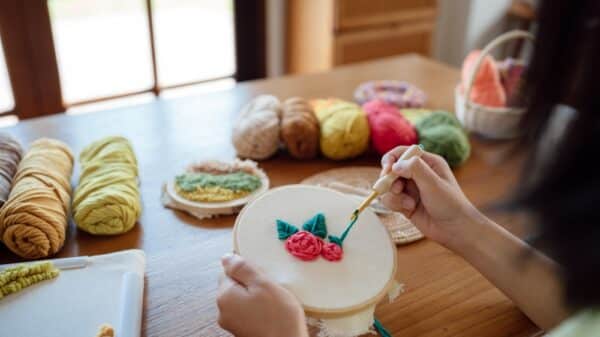
Repetitive, low-pressure movements give your focus a steady place to rest. Rather than actively trying to suppress intrusive thoughts, you follow a continuous trail of yarn across material, leaving less room for worry to escalate. Activities like knitting, coloring, and woodworking function similarly, though punch needle embroidery offers a particularly forgiving learning curve.
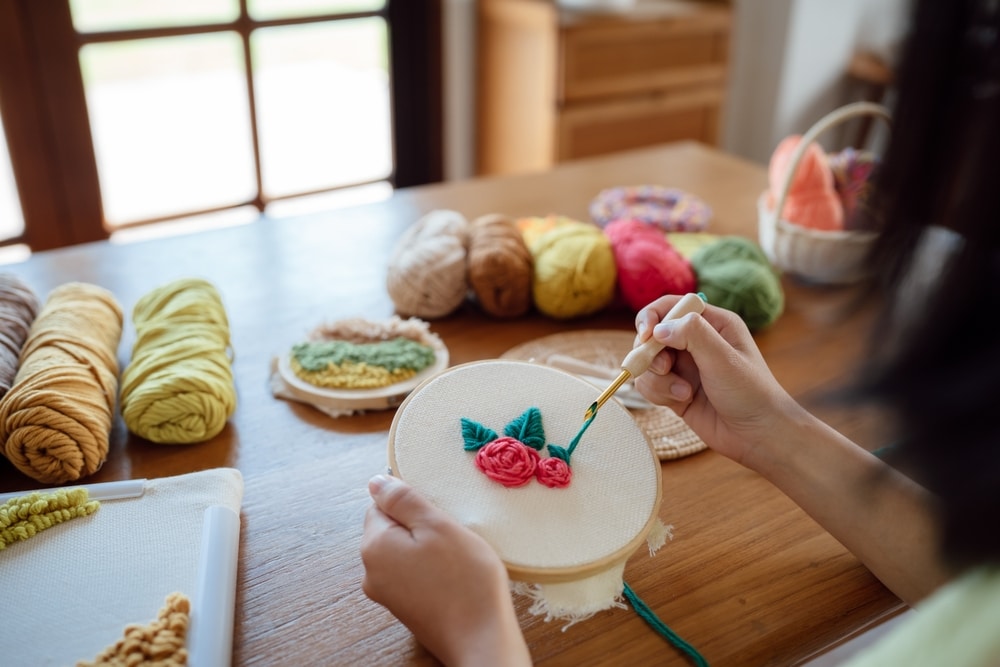
This technique relies on a specialized hollow needle that guides yarn through fabric via a continuous, rhythmic motion. Correcting a mistake is as simple as pulling out a stray loop within seconds, meaning errors carry virtually no penalty. Furthermore, visible progress often appears within the first hour—an important factor for consistency, as hobbies that deliver immediate feedback are far more likely to be repeated.
Beginners frequently hesitate before making their first stitch, usually due to the initial planning phase. All-inclusive craft kits simplify this process by featuring pre-printed designs directly on the fabric alongside the necessary yarn and instructions, removing the need for sketching or measuring.
This minimal barrier to entry explains why creative activities integrate so smoothly into wellness routines, offering a sustainable way to support daily emotional health.
Examining the Evidence on Creative Hobbies and Stress Reduction
To be entirely transparent, clinical trials specifically investigating punch needle embroidery do not currently exist. Instead, available insights stem from broader scientific research into creative pursuits, which reveals encouraging yet measured findings.
A population-based study published in 2024 surveyed nearly 7,200 individuals across the United Kingdom. Participants who regularly engaged in arts and crafts reported elevated life satisfaction, greater happiness, and a stronger sense of purpose. While noteworthy, these observations are correlational, meaning it remains possible that naturally happier individuals are simply more inclined to craft.
Laboratory findings offer similar trends. Controlled trials measuring biological markers, such as cortisol levels before and after short art-making sessions, demonstrate reductions in a significant majority of adult participants regardless of their prior artistic skill, though a minority experience no change or slight increases.
Broader reviews examining hobbies and psychological well-being generally associate leisure activities with lower levels of reported depression and anxiety, though data specifically targeting acute stress remains mixed. Consequently, crafting is best viewed as a supportive, low-risk lifestyle habit rather than a clinical treatment.
The Current Landscape of Daily Stress
Modern tension extends far beyond professional obligations. Broad population surveys frequently highlight widespread feelings of isolation and a general need for greater emotional support among adults navigating everyday life.
While a solitary hobby cannot eliminate deep-seated isolation, it serves as an accessible, self-directed tool to utilize during a difficult evening. When combined with other deliberate lifestyle adjustments, creative outlets can form part of a balanced approach to managing daily pressure.
Additionally, crafting can transition into a communal experience. Research examining group-based artistic activities suggests that collaborative creative practice can positively moderate the relationship between social connection and psychological strain, indicating that shared stitching groups may offer unique benefits compared to isolated sessions.
A Simple 20-Minute Creative Exercise for Beginners
Committed time blocks do not need to span an entire weekend. Consider implementing a brief, structured routine:
- Designate a specific time and set a 20-minute timer.
- Place your phone in a separate room entirely out of sight.
- Secure the fabric tightly within the embroidery hoop, as loose material is a common obstacle for beginners.
- Stitch the outer boundaries first before filling in larger interior sections.
- Conclude the session immediately when the timer sounds, even if a row remains unfinished.
- Briefly note your mood in a single sentence both before and after the session.
Maintaining a short log of your mood helps track whether the habit genuinely benefits you over a two-week period. Expect uneven stitches initially; simply pull them out and try again. The ultimate objective is not perfection, but rather a dedicated window of time where physical activity slows down racing thoughts.
Maintaining the Habit Without Adding Pressure
Routines often dissolve when they begin to feel like mandatory chores. Opt for smaller projects that reach completion within a few sittings to foster a sense of accomplishment, and avoid measuring early attempts against unrealistic standards. Perfectionism quickly transforms a restorative pastime into another source of frustration.
Anchoring the activity to an existing part of your day—such as a quiet weekend morning—can also help integrate the habit seamlessly into your weekly schedule.
Finally, it is essential to acknowledge boundaries: if persistent anxiety or stress significantly disrupts your sleep or daily functioning, creative hobbies should be viewed strictly as a complementary tool rather than a replacement for professional guidance from a qualified healthcare provider.
Final Thoughts
Finding an effective way to unwind does not require an elaborate strategy, just a method you are willing to practice consistently. Choose a tactile hobby, commit to short sessions over a brief trial period, and evaluate the results based on how you feel afterward. If the activity helps quiet your thoughts and ease physical tension, incorporate it regularly into your routine.