















Innovative Strength Solutions: Effective Alternatives to Traditional Weights
Creating a high-performance strength routine at home does not require a massive collection of iron plates or dumbbells. Effective weight substitutes focus on generating progressive resistance—the gradual increase of stress placed upon the body—by leveraging body weight, gravitational angles, elastic tension, or stable external loads.
Beyond simple household items, there are numerous professional-grade tools designed to challenge your muscles through full-body movements, pulling patterns, and rotational stability. Each method offers a unique way to scale difficulty while accommodating the spatial constraints of a home environment.
Prior to beginning any new physical regimen, it is essential to consult with a healthcare professional, particularly if you are managing existing injuries or chronic health conditions.
Core Concepts: Utilizing Resistance Alternatives at Home
Premium weight alternatives facilitate strength gains by manipulating leverage, tension, and mass, proving that barbells are not a requirement for a comprehensive fitness program.
Selection should be based on identifying gaps in your current movement patterns, such as a lack of pulling exercises, or by evaluating your available storage and anchor points.
Modern home gym collections often integrate suspension systems, multi-grip weights, and high-tension bands into a single, compact ecosystem for easier comparison and setup.
While everyday objects can suffice for slow, low-impact movements, purpose-built fitness equipment is safer and more effective for ballistic exercises, overhead work, and heavy loading.
Strategic Selection of Non-Traditional Training Tools
When building a home gym without traditional weights, prioritize movement versatility over the equipment itself. A high-quality setup should allow you to perform fundamental human movements: pushing, pulling, squatting, hinging, carrying, and rotating.
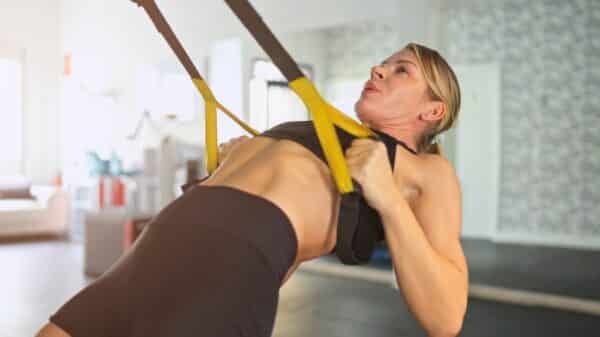
The most efficient tools are often the most adaptable. For instance, a suspension system allows you to modify the difficulty of a movement simply by adjusting your foot placement or body angle. In contrast, resistance bands provide “variable resistance,” meaning the tension increases as the band is stretched further.
External loads like sandbags, weighted vests, or multi-functional bells provide a constant gravitational challenge similar to iron, while bodyweight-centric tools use physics to make familiar exercises more difficult by altering your stability or center of gravity.
Consider the logistics of your training space. Factors like floor protection, ceiling height for overhead work, and noise levels are critical. A tool is only valuable if it can be used safely and consistently in your specific environment. Furthermore, consider your long-term progression. Beginners may see rapid results with body weight alone, but advanced trainees may eventually require heavier external loads or specialized tools to continue driving adaptation.
17 Versatile Substitutes for Conventional Gym Weights
The following list outlines the most effective alternatives to standard dumbbells and barbells, ranging from professional suspension systems to controlled household stand-ins. Each entry highlights a method for progression and a primary logistical consideration.
1. Suspension Training Systems
Suspension trainers are highly regarded because they transform your own body weight into a fully adjustable resistance tool. By changing the angle of your body relative to the floor, you can instantly modify the intensity of rows, presses, and lower-body movements. Increasing the “time under tension” or shifting to single-limb variations further enhances the challenge. These systems are rooted in portability and versatility, requiring only a secure anchor point and a clear floor space to function as a complete gym.
2. Multi-Functional Training Bells
Hybrid tools like the YBell serve as a four-in-one replacement for dumbbells, kettlebells, medicine balls, and push-up stands. By simply changing your grip, you can transition from high-intensity swings to stable floor presses. While these tools have a fixed weight, progression is achieved through increased repetitions, improved tempo control, or more complex movement combinations.
3. Elastic Resistance Bands
Resistance bands are unique because they provide “accommodating resistance,” getting harder as you reach the peak of a movement. Full-length loops are ideal for compound lifts like squats and deadlifts, while smaller “mini-bands” are excellent for glute activation and lateral stability. Research indicates that elastic resistance can produce strength gains comparable to traditional weights when the intensity is matched. Always inspect bands for wear and tear before use to ensure safety.
4. Pure Bodyweight Training
Calisthenics—such as planks, push-ups, and split squats—form a foundational strength base without requiring any gear. Difficulty is scaled by increasing the range of motion, slowing down the eccentric (lowering) phase, or reducing the number of contact points with the floor. The primary limitation of pure bodyweight training is the difficulty of performing “pulling” exercises, which usually require some form of overhead bar or strap.
5. Gymnastics Rings
Rings introduce a high degree of instability, forcing the stabilizer muscles to work harder during dips, rows, and pull-ups. They are highly portable but require a sturdy overhead beam or pull-up bar. Mastery of the rings begins with stable, feet-supported movements before progressing to full suspension.
6. Training Sandbags
Unlike iron, the weight inside a sandbag shifts during movement, challenging your core and grip in a way that dumbbells cannot. They are exceptional for functional carries and “awkward” lifts. Progression involves adding more filler material, increasing the duration of carries, or utilizing bags with multiple handle configurations.
7. Medicine and Slam Balls
These are designed for explosive power and metabolic conditioning. While standard medicine balls are used for tosses and weighted core work, slam balls are built to absorb high-velocity impacts. They are excellent for building “rate of force development” but offer less precision for incremental strength loading compared to other tools.
8. Weighted Vests
A weighted vest allows for hands-free resistance during movements like lunges, push-ups, or even walking. It is a seamless way to increase the load of your own body weight without altering your natural movement mechanics. Ensure the weight is distributed evenly to avoid placing undue stress on the spine or joints.
9. Rotational Resistance Bars
Tools like the Rip Trainer focus specifically on asymmetrical loading and rotation. By using a weighted bar attached to an elastic cord, you can train the body to produce and resist rotational force—a critical component of athletic performance. This requires a dedicated anchor point and a clear “swing zone” for safe operation.
10. Battle Ropes
Primarily used for high-intensity conditioning, battle ropes challenge upper-body endurance and core stability. While they aren’t a direct replacement for heavy squats, they provide a low-impact way to improve cardiovascular health and muscular stamina. They do, however, require a significant amount of floor length.
11. Dedicated Pull-Up Bars
A pull-up bar is the most effective solution for the “pulling gap” in home workouts. It allows for vertical pulling movements that are difficult to replicate with other gear. Progression can be managed through the use of assistance bands or by performing slow, controlled “negative” repetitions.
12. Floor Sliders
Sliders utilize friction to create a unique challenge for the core and legs. By sliding one limb away from the center of gravity during lunges or “body saws,” you increase the demand on the stabilizing muscles. They are inexpensive and highly portable but require specific floor surfaces (hardwood for towels/sliders or carpet for plastic plates).
13. Inflatable Stability Balls
Stability balls are used to increase the range of motion in core exercises and introduce balance challenges to movements like hamstring curls or chest presses. While they don’t support extremely heavy loads, they are excellent for improving proprioception and functional stability.
14. Wearable Ankle and Wrist Weights
These provide a light, constant resistance for isolated leg or arm movements. They are most effective for rehabilitation or targeted Pilates-style work. Avoid using them for high-impact activities like running, as they can alter joint mechanics and increase injury risk.
15. The Weighted Backpack
An improvised solution for loaded carries and squats, a sturdy backpack can be filled with books or water bottles. To ensure safety, the bag must be high-quality with reinforced straps, and the internal load should be padded to prevent shifting. This is a cost-effective way to start “rucking” or adding weight to calisthenics.
16. Water Jugs and Bottles
Sealed jugs of water provide an adjustable external load for curls, presses, and rows. One gallon of water weighs approximately 8.3 pounds, making it easy to calculate your resistance. Ensure the containers are leak-proof and have comfortable, secure handles before use.
17. Dry Goods and Canned Items
For those just beginning a fitness journey, items like bags of rice or canned vegetables can serve as introductory weights for high-repetition endurance work. While they lack the durability of professional equipment, they offer a zero-cost entry point for staying active at home.
The Utility of Multi-Grip Tools in Small Spaces
In a minimalist home gym, space is a premium commodity. Multi-functional equipment that combines the benefits of several tools into one—such as the YBell—solves the problem of clutter. By providing the utility of a kettlebell for swings, a dumbbell for presses, and a stand for push-ups, these tools allow for a diverse workout without the need for an equipment rack. They are particularly effective for “flow” workouts where you transition quickly between different types of exercises.
Matching Resistance Tools to Specific Fitness Goals
Every tool has a primary strength. Use the table below to determine which equipment aligns with your specific space requirements and training objectives.
| Tool Category | Primary Use | Resistance Style | Space Required | Progression Method |
|---|---|---|---|---|
| Suspension Trainer | Full-Body Versatility | Leverage & Bodyweight | Small (with anchor) | Body angle & Stance |
| Multi-Grip Bells | Compact Strength | Fixed Load | Small | Tempo & Volume |
| Strength Bands | Travel & Variable Tension | Elastic Tension | Minimal | Band thickness |
| Calisthenics | Foundational Fitness | Bodyweight | Small | Leverage & Reps |
| Gymnastics Rings | Upper Body Pulling | Instability | Medium (overhead) | Movement complexity |
| Sandbags | Functional Carries | Shifting Load | Medium | Total mass |
| Weighted Vests | Increased Base Load | Static Mass | Small | Incremental weight |
| Rotational Bars | Core & Power | Asymmetrical Tension | Large arc | Cord resistance |
Advanced Progression Strategies for Non-Traditional Weights
Progressive overload is the cornerstone of muscle growth. Without a rack of heavier plates, you must get creative with how you challenge your body. The American College of Sports Medicine emphasizes that altering variables like volume, rest periods, and frequency is essential for continued improvement.
To make an exercise harder without adding weight, try the following:
- Tempo Training: Slow down the movement, especially during the lowering phase.
- Isometric Holds: Pause for 3–5 seconds at the most difficult part of the lift.
- Mechanical Advantage: Alter your body position to make the leverage less favorable (e.g., elevating your feet during push-ups).
- Unilateral Work: Perform the movement with one arm or one leg to double the demand on that side.
Maximizing Results with Suspension Systems
Suspension training offers a unique “ladder” of progression. Because the resistance is determined by your angle to the anchor point, you can make an exercise harder mid-set by simply stepping further back or forward. This allows for “drop sets” where you continue performing repetitions at a easier angle once you reach fatigue at a steeper one. Consistency is key; track your foot placement and strap length to ensure you are actually increasing the challenge over time.
Essential Safety Protocols for Home Training
Training at home requires a higher level of personal vigilance. Before every workout, perform a quick equipment audit: check straps for fraying, inspect bands for tiny tears, and ensure your anchor points are still secure. If you are using household items, be wary of their structural integrity—plastic handles and zippers are not designed for the stresses of high-intensity exercise.
Ensure your workout area is clear of furniture, pets, and tripping hazards. If you are performing explosive movements like slams or swings, confirm that the floor and walls can handle the impact without damage. Safety is the foundation of consistency; never sacrifice form or equipment integrity for the sake of a heavier “improvised” lift.
Common Questions About Home Resistance Training
Is it possible to develop significant muscle using only weight alternatives?
Absolutely. Muscle hypertrophy occurs when fibers are subjected to sufficient mechanical tension and metabolic stress. As long as you are using tools like bands, body weight, or sandbags to reach a point of near-failure and progressing that challenge over time, your body will adapt by building muscle.
What are the most effective substitutes for a standard set of dumbbells?
A combination of a suspension trainer for pulling, a multi-functional bell (like a YBell) for pressing and carrying, and heavy resistance bands for lower-body loading will provide a more versatile and space-efficient setup than a traditional dumbbell rack.
Can elastic bands truly replace iron plates?
While the “feel” of the resistance is different due to the increasing tension of the stretch, research shows that bands can stimulate similar strength gains. They are particularly effective for rehabilitative exercises and adding variety to traditional movements.
How can I ensure my improvised weights are safe to use?
Stick to compact, sealed items with ergonomic handles. A backpack is generally safer than a loose bag of rice because the weight is distributed across your shoulders. Always prioritize purpose-built fitness gear for any movement that involves swinging or overhead positions.
Final Thoughts on Customizing Your Home Gym
Building a sustainable home strength routine is about finding the right balance between versatility and practicality. By choosing tools that address your specific movement needs—whether it’s the portability of a suspension trainer, the multi-functional design of a YBell, or the variable tension of resistance bands—you can achieve professional-level results in a fraction of the space. Focus on mastering the mechanics of progressive resistance, maintain a rigorous safety check, and choose the equipment that encourages you to train consistently week after week.