



















A sprinter struggling to achieve full leg extension, a basketball player whose vertical jump is limited by stiff ankles, and a pitcher experiencing shoulder discomfort—these are common scenarios in competitive sports. While many coaches respond by increasing the weight on the bar, the actual bottleneck is often mobility, not a lack of raw strength. When an athlete hits a performance ceiling, the restriction is frequently found in the joints rather than the muscles.
This guide outlines 10 high-impact mobility exercises designed to enhance speed and power. We provide specific form cues to ensure safety and a structured routine you can implement immediately. The selection includes three TRX Suspension Trainer exercises for integrated stability, along with bodyweight and resistance-band drills that require minimal equipment.
The Link Between Joint Mobility, Speed, and Power
Mobility is defined as the ability to maintain active, neuromuscular control throughout a joint’s range of motion. If your nervous system cannot control a position, you cannot safely produce force from it. Hip mobility determines the length of a sprint stride, while ankle dorsiflexion is a primary factor in vertical jump height and the ability to change direction quickly. Furthermore, thoracic spine mobility is essential for overhead reach and rotational power, and shoulder health dictates how much load the upper body can safely manage.
A 2024 review regarding dynamic warm-ups for athletic performance and injury prevention supports the modern coaching consensus: athletes who prioritize active mobility before training exhibit superior performance and lower injury rates. The traditional reliance on static stretching has been superseded by evidence-based dynamic preparation that readies the joints for high-intensity movement.
The following 10 exercises form a comprehensive athletic mobility circuit:
- Wall-Assisted Ankle Dorsiflexion Drill
- The World’s Greatest Stretch
- 90/90 Hip Switches
- Cossack Squats
- Half-Kneeling Thoracic Rotations
- Quadruped Thoracic “Open Book”
- TRX Shoulder Y-T-W Series
- Banded Hip Distraction with Internal Rotation
- TRX Hip Hinge to Squat Integration
- TRX RIP Trainer Standing Rotations
Mobility vs. Flexibility: The Athlete’s Distinction
Flexibility is a passive attribute; it refers to how far a joint can be moved by an external force, such as gravity or a partner. Mobility, however, is the range of motion you can achieve and control through your own muscular effort. For athletes, mobility is far more critical than simple flexibility.
Relying on passive flexibility without active control can lead to joint instability. When an athlete moves at high speeds through a range they cannot control, the nervous system often inhibits force production to protect the joint from injury. This “emergency brake” response results in lost speed and power. Every drill in this routine is designed to improve active control, ensuring you can utilize your full range of motion under the stress of competition.
Implementation and Frequency Guidelines
This sequence is designed as a pre-training warm-up for lifting, conditioning, or sport-specific sessions. It typically requires 10 to 15 minutes to complete one or two rounds. To see lasting adaptations, aim for a minimum of three to four sessions per week; consistency is necessary for the nervous system to retain these improved movement patterns.
To perform these drills, you will need a clear floor space and a secure anchor point for a Suspension Trainer. Optional tools like a resistance band or foam roller can enhance the session, though many of the exercises are bodyweight-only. Please note: if you are currently experiencing acute pain or recovering from an injury, consult a physical therapist before starting this performance-focused routine.
10 Essential Mobility Exercises for Athletic Growth
This sequence follows a logical progression: the first four exercises focus on the lower body (ankles, hips, and adductors), followed by three drills for the thoracic spine and shoulders. The final three exercises integrate the entire body and focus on rotational capacity. You may perform the full circuit or select specific drills to address your individual mobility limitations.
1. Wall-Assisted Ankle Dorsiflexion Drill
Ankle mobility is a foundational requirement for explosive movement. Research into ankle dorsiflexion restriction indicates that limited range increases knee impact and reduces push-off force during jumping and sprinting. This drill specifically targets the ankle joint capsule and the soleus muscle.
Execution:
- Begin in a half-kneeling position facing a wall, with your front toes approximately four inches from the baseboard.
- Drive your front knee forward toward the wall while keeping your heel firmly planted.
- Hold the end-range position for two seconds before returning to the start.
- Perform 8 to 10 repetitions on each side.
Form Cues: Ensure your heel never leaves the floor. Keep your torso upright and track your knee slightly outside your big toe. As your mobility improves, move your foot further from the wall.
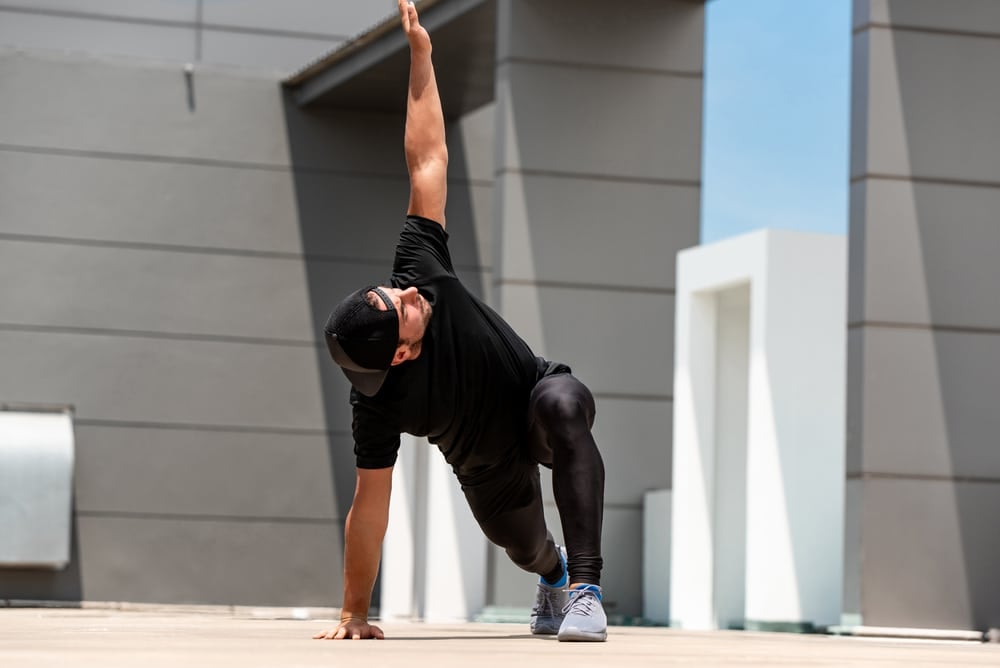
2. The World’s Greatest Stretch
Widely utilized by elite coaches, this movement addresses multiple areas simultaneously: hip flexor mobility in the trailing leg, hamstring length in the lead leg, and thoracic rotation. It is an efficient way to open the primary “power centers” of the body.
Execution:
- Enter a deep lunge with your right foot forward.
- Place both hands on the floor inside your front foot.
- Lower your right elbow toward the floor.
- Reach your right hand toward the ceiling, rotating your chest open.
- Return your hand to the floor and shift your weight back to straighten the front leg for a hamstring stretch.
- Complete 5 repetitions per side.
Form Cues: Keep the back leg fully extended and active. Focus on rotating through your rib cage rather than just reaching with your arm.
3. 90/90 Hip Switches
This drill develops both internal and external hip rotation. Limitations in internal rotation are particularly detrimental to athletes, as they cause a loss of force during cutting, throwing, and sprinting.
Execution:
- Sit on the floor with both legs bent at 90-degree angles—one in front and one to the side.
- Maintaining a tall spine, rotate your hips to switch the position of your legs.
- Perform 8 to 10 controlled switches.
Form Cues: Initiate the movement from your knees. If you struggle to sit upright, use your hands for support behind your hips. Lean slightly forward over the front knee for an increased stretch.
4. Cossack Squats
The Cossack squat is vital for athletes who move laterally, such as those in soccer, basketball, or MMA. It builds adductor mobility and deep hip flexion while strengthening the legs in a wide stance.
Execution:
- Stand in a wide stance with toes turned slightly outward.
- Shift your weight to one side and squat deeply, keeping the opposite leg straight.
- Keep the heel of the straight leg down and the toes pointed up.
- Return to center and switch sides.
- Perform 5 to 6 repetitions per side.
Form Cues: Keep your chest elevated and the foot of the working leg flat on the floor. If your heel lifts, use a smaller range of motion or a narrower stance.
5. Half-Kneeling Thoracic Rotations
The thoracic spine must be mobile to allow for effective overhead reaching and rotational velocity. Research shows that a stiff thoracic spine often forces the shoulder and elbow to compensate, increasing the risk of injury in overhead athletes.
Execution:
- Start in a half-kneeling position.
- Place your hands behind your head with elbows flared.
- Rotate your upper body toward the side of your front leg.
- Return to the center and repeat for 8 repetitions per side.
Form Cues: Keep your hips facing forward and immobile; the rotation should only happen in your upper back. Exhale as you rotate to deepen the range.
6. Quadruped Thoracic “Open Book”
This drill refines rotation while the shoulders are under light load. It teaches the upper back to move independently of the lower back, which is essential for any athlete who generates rotational power.
Execution:
- Begin on all fours with hands under shoulders and knees under hips.
- Place one hand behind your head.
- Rotate your elbow down toward the opposite wrist, then rotate upward toward the ceiling.
- Complete 8 repetitions on each side.
Form Cues: Ensure your hips do not shift as you rotate. Pause at the top of the movement to maximize the stretch in the chest and upper back.
7. TRX Shoulder Y-T-W Series
Effective shoulder mobility requires active scapular control. The TRX Y-T-W series primes the shoulders by training control through three distinct overhead patterns, making it an excellent warm-up for throwing or heavy upper-body lifting.
Execution:
- Set the TRX straps to mid-length and stand facing the anchor point.
- Lean back with arms extended until the straps are taut.
- Pull your body toward the anchor by raising your arms into a “Y” shape.
- Repeat for the “T” (arms out to sides) and “W” (elbows bent) positions.
- Perform 8 repetitions for each letter.
Form Cues: Maintain a rigid plank position throughout. Keep your shoulders down and away from your ears, focusing on squeezing the shoulder blades together.
8. Banded Hip Distraction with Internal Rotation
This technique uses a resistance band to create space within the hip joint. It is a highly effective way to restore internal rotation that has been lost due to repetitive sports demands or prolonged sitting.
Execution:
- Anchor a heavy resistance band low to the ground and loop it around your upper thigh, near the hip crease.
- Step away from the anchor to create tension and descend into a half-kneeling position.
- Rotate your lower leg in and out to mobilize the hip joint.
- Complete 10 rotations per side.
Form Cues: Maintain a tall posture and move slowly. The tension should feel like a gentle “pull” within the hip joint.
9. TRX Hip Hinge to Squat Integration
This integration drill uses the Suspension Trainer to assist with depth and balance. By offloading some body weight, you can reach deeper ranges of motion, training the nervous system to accept these positions during unassisted athletic movements.
Execution:
- Face the anchor, holding the handles at chest height.
- Perform a hip hinge by pushing your glutes back while keeping your back flat.
- Transition from the hinge into a deep squat.
- Drive through your heels to stand.
- Perform 8 to 10 repetitions.
Form Cues: Use the straps for balance, but ensure your legs are doing the primary work. Keep your chest up and your weight centered in your heels.
10. TRX RIP Trainer Standing Rotations
This exercise bridges the gap between a warm-up and high-output performance. The offset resistance of the RIP Trainer requires full-body integration, mimicking the demands of a baseball swing, a tennis serve, or a sprint.
Execution:
- Stand perpendicular to the anchor point, holding the RIP Trainer with both hands.
- Extend the bar away from your chest.
- Rotate your torso away from the anchor in a controlled arc, then return slowly.
- Complete 8 to 10 repetitions per side.
Form Cues: Focus on rotating through your hips and upper back rather than twisting your lumbar spine. Keep your core braced and maintain tension on the cord throughout the set.
Standardizing Your Mobility Protocols
Depending on your available time, you can utilize one of two formats:
The Express Protocol (10 Minutes): Ideal for game days or tight schedules.
- Ankle Dorsiflexion Drill
- World’s Greatest Stretch
- 90/90 Hip Switches
- Half-Kneeling Thoracic Rotations
- TRX Shoulder Y-T-W Series
Perform one set of each exercise consecutively.
The Comprehensive Protocol (15-20 Minutes): Recommended for dedicated training days.
- Perform all 10 exercises in the listed order.
- Rest 30 to 45 seconds between drills.
- Add a second round on active recovery days to deepen adaptations.
Methods for Advancing Mobility Progress
Once the basic movements become comfortable, use these levers to continue improving:
- End-Range Tension: Incorporate a 3-second hold at the furthest point of every repetition to improve neurological control.
- Added External Load: Use a light weight (like a kettlebell or dumbbell) during Cossack squats or the World’s Greatest Stretch to bridge the gap toward strength.
- Sport-Specific Focus: Sprinters should prioritize ankle and hip drills, while rotational athletes (like golfers or pitchers) should emphasize the RIP Trainer and thoracic movements.
Common Errors in Athletic Mobility Training
Avoid these frequent mistakes to ensure your mobility work translates to performance:
- Mis-timing Static Stretches: Holding passive stretches for long periods before a workout can reduce muscle explosiveness. Save static stretching for post-workout recovery.
- Viewing Mobility as Optional: Mobility is not an “extra”—it is the foundation of the strength program. Without it, you will eventually hit a plateau that more weight cannot fix.
- Isolating Single Joints: Stiff ankles can cause hip pain. Always train the entire movement chain rather than focusing solely on one problem area.
- Holding the Breath: Breath-holding creates internal tension that resists the stretch. Practice deep exhales to help the nervous system relax into new ranges.
- Lack of Consistency: Mobility is a fleeting adaptation. Performing these drills once a week is insufficient; aim for at least three sessions to see permanent change.
Frequently Asked Questions
Which mobility drills are most effective for athletes?
The most effective drills target the “gatekeeper” joints: the ankles, hips, thoracic spine, and shoulders. The 10 exercises featured in this guide provide a comprehensive solution for these high-value areas.
What are the best movements for hip mobility?
For athletes, the 90/90 Hip Switch, World’s Greatest Stretch, Cossack Squat, and Banded Hip Distraction offer the highest return on investment. They address internal and external rotation, which are essential for multidirectional speed.
How often should I perform mobility exercises?
Mobility should be performed daily or alongside every training session. A minimum of three to four sessions per week is required to prevent regression and lock in performance gains.
Is mobility better than traditional stretching for athletes?
Yes. Mobility focuses on active, usable range of motion under load. Static stretching is passive and does not adequately prepare the nervous system for the explosive demands of sport.
Can mobility work actually make me faster?
Absolutely. By improving joint range, you can increase stride length and optimize push-off angles. Unlocking the hips and ankles allows for more efficient force application, which translates directly to higher top-end speeds.
Final Takeaway: Moving Better to Perform Better
Investing 15 minutes into a disciplined mobility routine three to four times a week can break through the physical limitations that hold many athletes back. It is a process of consistent preparation that eventually makes these improved ranges a permanent part of your athletic identity. By utilizing tools like the TRX Suspension Trainer, you can deload joints and safely explore deeper ranges, ensuring your body is prepared for the high-velocity demands of your sport. Move better, and the speed and power will follow.
References
“Dynamic Warm-Up in Athletic Performance and Injury Prevention.” PubMed Central, National Library of Medicine, 2024.
“The Effect of Different Degrees of Ankle Dorsiflexion Restriction on the Biomechanics of Stop-Jumping.” PubMed Central, National Library of Medicine.
“The Thoracic Spine in the Overhead Athlete.” Current Sports Medicine Reports, PubMed.