















Functional strength training is designed to develop the physical capabilities required for everyday life—moving heavy items up a flight of stairs, lifting a child safely, or rising from the floor with ease and stability. This guide explores 17 specific movements categorized by movement patterns, offering variations for bodyweight, free weights, and the TRX Suspension Trainer™ to accommodate any fitness level.
The Mechanics of Functional Training
Functional training focuses on multi-joint, multi-planar movements that prepare the body for real-world activity. Rather than isolating a single muscle group—as seen in traditional bodybuilding—these compound movements train the body to work as a cohesive unit. This approach ensures that the strength built in the gym translates directly to daily tasks like carrying groceries, climbing, or rotational movements like swinging a golf club.
This philosophy is at the core of the TRX system. Developed by former Navy SEAL Randy Hetrick using a jiu-jitsu belt and parachute webbing, the Suspension Trainer™ was born out of a necessity to maintain peak physical readiness anywhere in the world. The goal remains clear: move more efficiently, increase total-body strength, and improve long-term physical durability.
Unlike isolated strength training or high-intensity interval training (HIIT), which often prioritizes heart rate over specific movement quality, functional training is a strength-first modality. It emphasizes the movement patterns used outside of a controlled gym environment. As with any new physical program, individuals with a history of injury or chronic health conditions should consult a healthcare professional before beginning.
Core Pillars: The Seven Essential Movement Patterns
Human biomechanics can be distilled into seven fundamental patterns: push, pull, squat, hinge, lunge, carry, and rotate. Supporting these movements is core stability, specifically anti-extension and anti-rotation, which protects the spine and allows for the safe transfer of power through the limbs.
Training across all seven patterns ensures a balanced physique and eliminates the “blind spots” or weak links that often lead to chronic pain or injury. Research, including insights from Harvard Health Publishing, indicates that focusing on these daily demands is the most effective way to maintain fitness and mobility throughout one’s life.
17 Essential Exercises for Real-World Strength
The following exercises are grouped by their primary movement pattern. Whether you are using dumbbells, kettlebells, or a Suspension Trainer™, choose the progression that matches your current technical proficiency rather than your ego. Each move is compatible with standard functional training equipment.
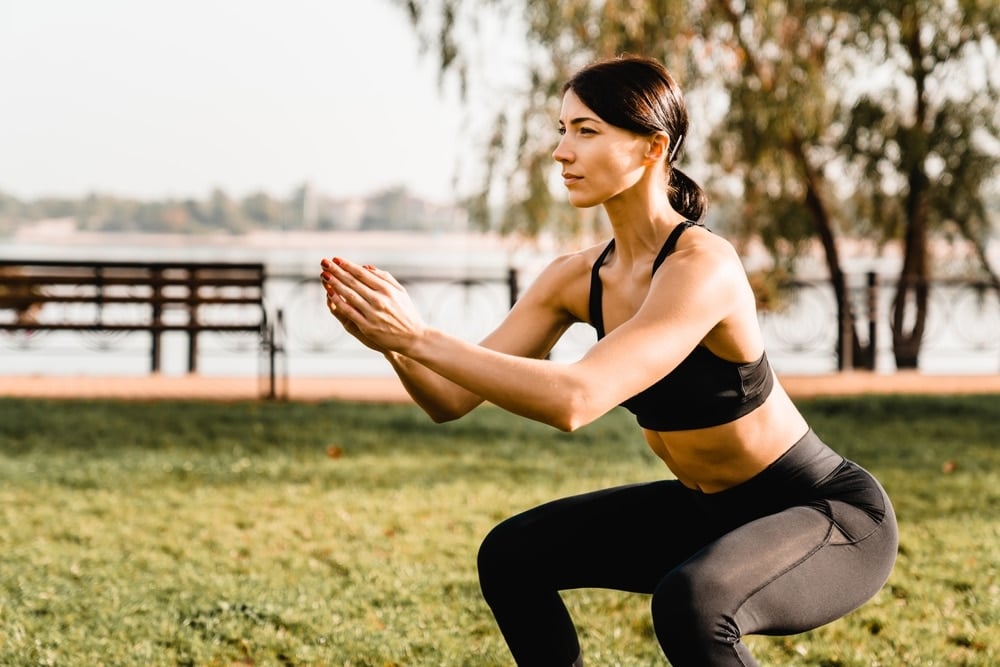
The Standard Bodyweight Squat
The squat is perhaps the most fundamental movement in existence. It is the mechanic used for sitting, standing, and entering or exiting vehicles. To perform it correctly, stand with feet shoulder-width apart. Brace the midsection, drive the hips back and down, and ensure the knees track in line with the toes. Keep the chest upright and drive through the midfoot to return to a standing position.
A common error is the knees caving inward (valgus). To correct this, focus on “spreading the floor” with your feet and actively pushing the knees outward during the descent.
The Front-Loaded Goblet Squat
By holding a weight—such as a dumbbell or a TRX YBell—at chest height, you shift the center of gravity forward. This encourages a more vertical torso and forces the core to engage more intensely. This variation is an excellent transition between bodyweight movements and more advanced barbell training.
Hold the weight close to your sternum with elbows tucked. Execute the squat with the same mechanics as the bodyweight version, focusing on depth and spinal neutrality. The YBell is particularly effective here for its ergonomic grip.
TRX Suspension Trainer™ Assisted Squat
For those managing mobility limitations or recovering from injury, the Suspension Trainer™ provides essential support. It allows the user to offload a portion of their body weight, focusing entirely on the path of the hips and knees without the full stress of gravity.
Hold the handles at chest height and step back until the straps are taut. As you sit back into the squat, use the straps for balance rather than pulling yourself upward. The legs should remain the primary movers.
The Classic Push-Up
The push-up remains the gold standard for horizontal pushing. It integrates the chest, anterior deltoids, and triceps while requiring significant core stability to maintain a rigid plank position. Maintain a straight line from the crown of the head to the heels, lowering the chest until the elbows reach a 45-degree angle relative to the torso.
If a standard push-up is too difficult, elevate the hands on a bench. To increase the challenge, use the Suspension Trainer™ handles to introduce instability, which forces the shoulder stabilizers to work harder.
TRX Suspension Trainer™ Chest Press
Pushing against unstable straps requires more core recruitment than a traditional bench press. This move mimics real-world pushing scenarios where the surface or object may be inconsistent. Face away from the anchor point, lean forward into a plank, and lower your chest toward your hands before pressing back to a full lockout.
The difficulty is adjusted by the angle of the body; a steeper lean increases the resistance. Prioritize scapular stability over the degree of the lean.
Bent-Over Dumbbell Row
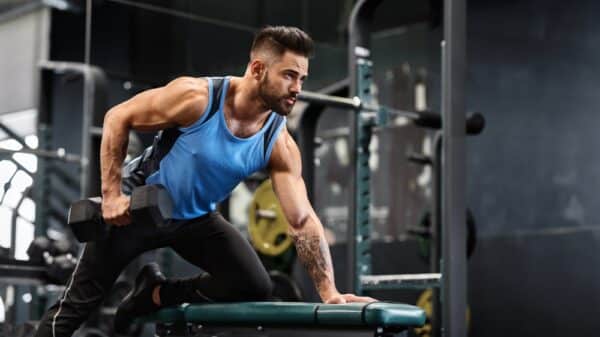
To counter the “forward-slumped” posture caused by modern desk work, the horizontal pull is essential. The bent-over row strengthens the posterior chain and the muscles responsible for pulling the shoulders back. Hinge at the hips with a flat back, let the weights hang, and pull them toward the ribcage while keeping the elbows close to the body.
If you feel strain in the lower back, reduce the weight and ensure the core is fully braced to maintain a neutral spine.
TRX Suspension Trainer™ Row
This is a highly versatile pulling exercise. By simply changing the position of your feet, you can adjust the resistance from light to extremely challenging. Face the anchor point, lean back with a braced core, and pull your chest toward the handles by retracting the shoulder blades.
Suspension rows often build functional capacity faster than machine rows because they require total-body tension to maintain the plank position throughout the movement.
The Renegade Row
This exercise combines a plank with a rowing motion, creating an intense anti-rotation challenge. While one arm pulls the weight, the rest of the body must fight to keep the hips square to the ground. This reflects real-world strength, where force is often applied while the body is in an asymmetrical position.
Place your hands on dumbbells in a high plank position. Row one weight to the hip, pause, and lower it slowly before switching sides. Keep the feet wide to maintain stability.
Romanian Deadlift (RDL)
The hip hinge is the most important pattern for protecting the lower back. The RDL trains you to move from the hips rather than rounding the spine. Holding weights in front of the thighs, push the hips back while keeping the knees slightly soft. Lower the weights along the shins until a stretch is felt in the hamstrings, then drive the hips forward to stand.
Ensure the movement is felt in the glutes and hamstrings; if the lower back is doing the lifting, the technique needs adjustment.
The Kettlebell Swing
This explosive hinge movement develops power in the posterior chain, which is critical for running, jumping, and lifting heavy objects quickly. Hike the kettlebell back between the legs and snap the hips forward to propel the bell to chest height. The arms are merely guides; the power comes from the hips.
Note that a swing is not a squat. The knees should have minimal bend compared to the significant hinge at the hips.
The Walking Lunge
Lunging develops unilateral (one-sided) strength and balance, which are vital for walking, climbing stairs, and athletic agility. Step forward and lower the back knee toward the floor, keeping the front shin vertical. Drive through the front heel to transition into the next step.
To increase the difficulty, hold weights in a goblet or suitcase position. This adds a core stability component to the leg work.
TRX Suspension Trainer™ Single-Leg Lunge
This advanced variation targets hip mobility and balance by placing the rear foot in the TRX cradle. This removes the ability to “cheat” with the back leg, forcing the front leg to handle the entire load. It is a highly effective way to identify and correct strength imbalances between the left and right sides.
Keep the chest upright and focus on a controlled descent. This move is particularly beneficial for maintaining independent movement as the body ages.
The Lateral Lunge
Most injuries occur during side-to-side (frontal plane) movement because it is often neglected in training. The lateral lunge builds hip strength and improves the ability to change direction safely. Step wide to one side, sit into the hip while keeping the other leg straight, and drive back to the starting position.
Keep both feet flat on the floor and the toes pointed forward to maximize the stretch and strengthening of the adductors and glutes.
The Farmer’s Carry
Perhaps the most “functional” move of all, the farmer’s carry involves picking up heavy weights and walking. This builds grip strength, shoulder stability, and postural endurance. Stand tall with the core braced and walk for a set distance or time without letting the weights swing or the shoulders slouch.
Research from institutions like Harvard suggests that grip strength is a key indicator of overall longevity. Simple carries are a practical way to invest in long-term health.
TRX RIP Trainer™ Rotational Chop
Rotational power is often the missing link in fitness programs. The RIP Trainer™ uses asymmetrical resistance to simulate the twisting forces found in sports like golf or tennis, as well as everyday tasks like reaching into the back of a car. Pivot through the hips and “chop” the bar across the body while maintaining a strong, braced core.
This movement bridges the gap between static core work and dynamic, real-world power.
The Forearm Plank
The plank is the foundation of anti-extension strength. It teaches the muscles to keep the spine neutral under tension. Set the forearms under the shoulders, create a straight line from head to heels, and squeeze the glutes. A high-quality 30-second plank where the core is fully engaged is far more effective than a multi-minute plank with a sagging lower back.
TRX Suspension Trainer™ Mountain Climber
This exercise serves as an excellent finisher, combining core stability with cardiovascular demand. With feet in the cradles and hands in a high plank, drive the knees toward the chest one at a time. The instability of the straps forces the shoulders and deep abdominal muscles to work overtime to keep the body level.
Designing Your Functional Fitness Routine
Consistency is more important than complexity. A balanced three-day split ensures all seven movement patterns are addressed while allowing for adequate recovery:
- Day 1: Focus on Push, Pull, and Squat patterns.
- Day 2: Focus on Hinge, Lunge, and Carry patterns.
- Day 3: Focus on Rotation and a full-body movement.
Select 5 or 6 exercises per session, performing three sets of 8 to 12 repetitions. The National Institutes of Health (NIH) suggests that 2 to 3 sessions of functional strength work per week are sufficient to see significant improvements in balance and independence. For those seeking structured guidance, the TRX Training Club™ app offers curated workouts tailored to available equipment.
The Advantages of Training for Functionality
Adopting a functional approach to fitness offers benefits that extend well beyond aesthetic changes:
- Direct Carryover: Strength built in the gym makes daily physical chores significantly easier.
- Enhanced Balance: Training unilateral and multi-planar movements reduces the risk of falls and improves coordination.
- Joint Health: By training in multiple directions, you build stability in the ligaments and smaller muscle groups that traditional lifting ignores.
- Efficiency: Compound movements engage more muscle groups simultaneously, leading to more productive workouts in less time.
- Aging Gracefully: Functional fitness is a primary recommendation for maintaining independence and mobility in later life.
Critical Training Errors to Sidestep
To maximize results and minimize injury risk, avoid these common pitfalls:
- Neglecting the Warm-up: Functional patterns require a prepared nervous system. Use dynamic movements to prime the body before adding load.
- Ignoring Progression: Always master the bodyweight version of a movement before adding external weight.
- Over-Focusing on One Plane: Ensure your program includes lateral and rotational work, not just forward-and-back movements.
- Confusing Strength with Cardio: While functional training can be intense, it should remain a strength-focused discipline. Don’t sacrifice form for a higher heart rate.
Functional Fitness: Your Questions Answered
What are the 7 main functional movements?
The human body is designed to push, pull, squat, hinge, lunge, carry, and rotate. A complete fitness program should incorporate all seven to ensure balanced strength.
What is a functional training exercise?
It is any movement that utilizes multiple joints and planes of motion to mimic tasks performed in daily life. It prioritizes movement patterns over muscle isolation.
How often should I do functional training?
For most adults, three to four sessions per week is optimal. According to NIH research, even two sessions per week can provide meaningful gains in strength and balance for healthy aging.
Can beginners do functional training?
Absolutely. The TRX Suspension Trainer™ is an ideal tool for beginners because every exercise can be modified for difficulty by simply changing your body angle or foot position.
Implementing Your New Training Program
The path to better movement is built on the seven foundational patterns: push, pull, squat, hinge, lunge, carry, and rotate. By integrating these 17 exercises into your routine, you are training for a lifetime of strength rather than just a temporary fitness goal. Start by selecting five movements to practice this week. Whether you use the TRX Suspension Trainer™ for its portability or the TRX Training Club™ app for guided sessions, the objective remains the same: move better, grow stronger, and live a more capable life.
Scientific References and Resources
“Functional Fitness.” Harvard Health Publishing, Harvard Medical School, https://www.health.harvard.edu/exercise-and-fitness/Functional-fitness.